With technological advancements and the growing acceptance of green development concepts, remote-controlled lawnmowers are transforming from "auxiliary tools" to "intelligent managers," breaking free from traditional operational limitations and steadily moving towards greater intelligence, efficiency, adaptability, and environmental friendliness, becoming a core growth point in the fields of garden maintenance and modern agriculture.
Intelligent upgrading is the core development trend of remote-controlled lawnmowers. In the future, the equipment will completely break away from the "passive execution" mode and leap towards "autonomous decision-making." By integrating AI vision, LiDAR, and SLAM technology, remote-controlled lawnmowers can quickly build a map of the work area, accurately identify more than 300 types of obstacles, and achieve dynamic obstacle avoidance and edge cutting, solving the pain point of "missed cutting due to obstacle avoidance" in traditional equipment. At the same time, remote control via mobile APP, real-time monitoring, and automatic return to charging will become standard features, allowing users to complete the entire lawn mowing process without on-site supervision, truly achieving a convenient "out-of-the-box" experience.
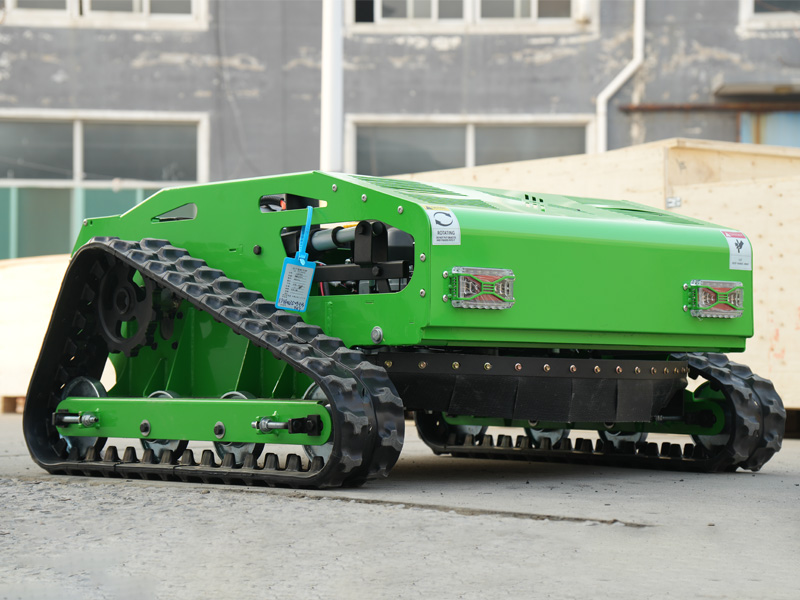
Full-scene adaptability will become key to market competition. Currently, there is a significant gap in mechanized operations in complex terrain. In the future, remote-controlled lawnmowers will overcome terrain limitations, easily handling complex scenarios such as 60° steep slopes, wetlands, and forests through widened tracks and low ground pressure design, adapting to the needs of orchards, riverbank protection, municipal greening, and other fields. Furthermore, modular design will become widespread, enabling integrated mowing, shredding, and fertilization operations by changing implements, improving equipment utilization and reducing user investment costs.
Green energy conservation and high efficiency go hand in hand, aligning with the global trend of low-carbon development. Lithium-ion batteries will become the mainstream, and the application of lithium iron phosphate batteries will enable the cycle life to exceed 2000 times, significantly improving the range. At the same time, the operating noise will be controlled below 65 decibels, 40% lower than traditional models, achieving zero-emission and low-pollution operation. The operating efficiency will also continue to be optimized, with a single-hour operating area of up to 2000 square meters, more than 10 times the efficiency of manual mowing, significantly reducing labor costs.
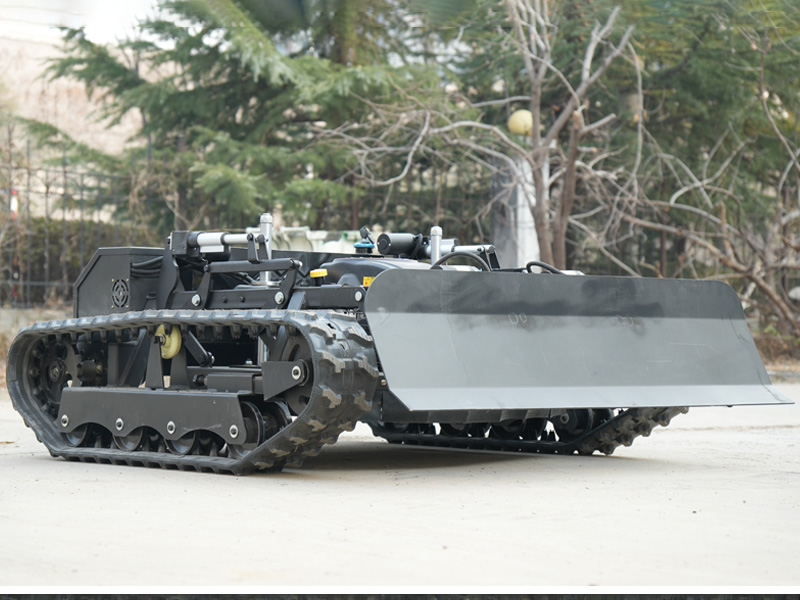
Furthermore, the lawnmower industry will gradually overcome core technological bottlenecks, reduce reliance on core components, and improve after-sales service and policy adaptation systems to make products more cost-effective. In the future, remote-controlled lawnmowers will achieve integrated development of "intelligence, efficiency, greenness, and diversification," not only reshaping garden maintenance models but also helping modern agriculture improve quality and efficiency, injecting technological momentum into green development.